
1 October 2026
Cash flow basics for a one person trade business
Cash flow explained for UK tradespeople running a one person firm. Get paid faster, plan for quiet months, and keep the money flowing all year.
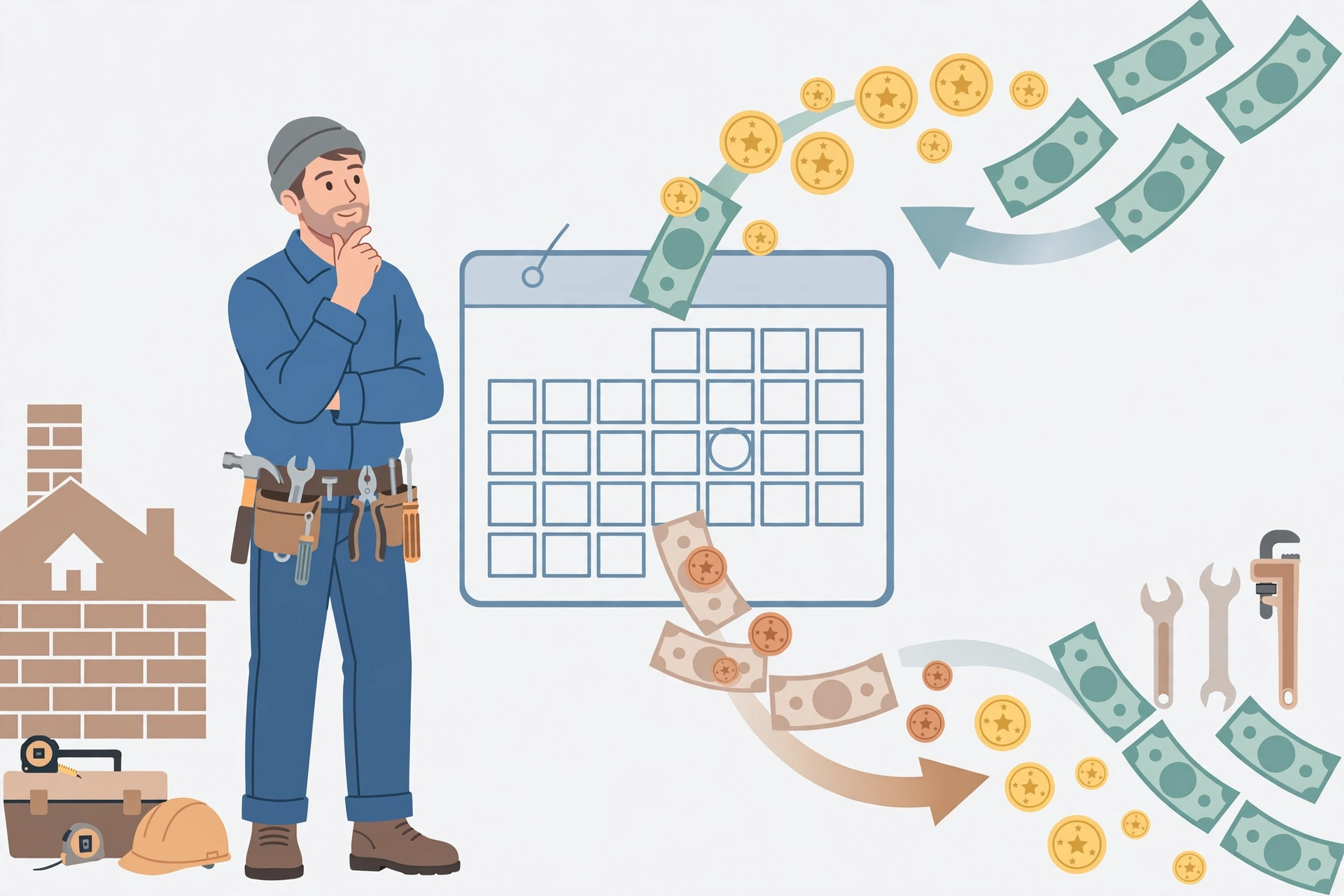
You can be fully booked and still run out of money. That is the cash flow trap. Profit tells you if the work pays. Cash flow tells you if you can pay the bills this week.
Here are the basics that keep a one person trade business on steady ground.
Cash flow is about timing
You invoice a job on Monday. The client pays three weeks later. But your van insurance comes out tomorrow and the materials supplier wants paying on Friday.
The money is coming. It is just not here yet. That gap is what cash flow is all about.
Know your money going out
List every regular outgoing and when it leaves your account.
Fixed costs come first. Van insurance, phone, public liability cover, loan repayments, subscriptions.
Big yearly bills need a plan. Self assessment tax has payments on account due in January and July. These catch a lot of tradespeople off guard. Put money aside for tax from every payment you receive. Your accountant can tell you roughly how much.
Materials are not free until the client pays. If you buy £800 of parts for a job and the client pays you in 30 days, you have funded that job yourself for a month. Price your quotes and your deposits with that in mind.
Get paid faster
Money in the bank sooner fixes most cash flow problems.
Invoice the same day. The clock on payment starts when you send the invoice, not when you finish the job. An invoice sent three weeks late gets paid three weeks late.
Set clear payment terms on every invoice. Write "payment due in 14 days" or "payment due in 30 days". Vague terms mean vague payment.
Ask for deposits on bigger jobs. A deposit of 30 percent covers your materials and shows the client is serious. Smaller jobs can often be paid on completion.
Chase politely and promptly. A friendly reminder the day after the due date works better than an angry one a month later. Most late payers are just disorganised, not dishonest.
Know your rights on late payment
When you invoice another business, not a private homeowner, the law is on your side.
Under the Late Payment of Commercial Debts Interest Act 1998, you can charge interest on overdue business invoices at 8 percent above the Bank of England base rate. You can also claim a fixed sum per late invoice: £40 for debts under £1,000, £70 for debts from £1,000 to £10,000, and £100 for debts over £10,000.
You do not need to mention this in your contract for the right to apply. Just knowing it often speeds things up.
Plan for quiet months
Most trades slow down at some point in the year. Builders go quiet over Christmas. Painters feel it in deep winter. Know your own pattern and prepare.
Save a buffer in the busy months. Even £200 a month builds up fast. Treat it like a bill you owe yourself.
Keep a simple forecast. A spreadsheet with 13 weeks of expected money in and money out shows problems weeks before they hit. Update it weekly. The habit matters more than the tool.
Line up maintenance work for slow periods. Servicing, safety checks, and small repairs keep cash coming in when big projects dry up.
A ten minute weekly routine
Pick one morning a week and do this.
- Send every invoice for finished work.
- Check who owes you money and send reminders.
- Pay any bills due this week.
- Glance at your forecast for the month ahead.
- Move money to your tax savings if you have not already.
Ten minutes a week beats a panic in January.
How PlusWise helps
PlusWise keeps your invoices, expenses, and client records in one place. You can invoice from your phone the moment a job finishes. You can see at a glance who owes you money and how overdue each invoice is. That is the foundation of healthy cash flow.
Sources checked October 2026: GOV.UK guidance on late commercial payments, charging interest and debt recovery; Late Payment of Commercial Debts (Interest) Act 1998 statutory interest order; HMRC guidance on Self Assessment payments on account.